Dry Land Practice: What the Fishin Frenzy Demo Really Shows a UK Player
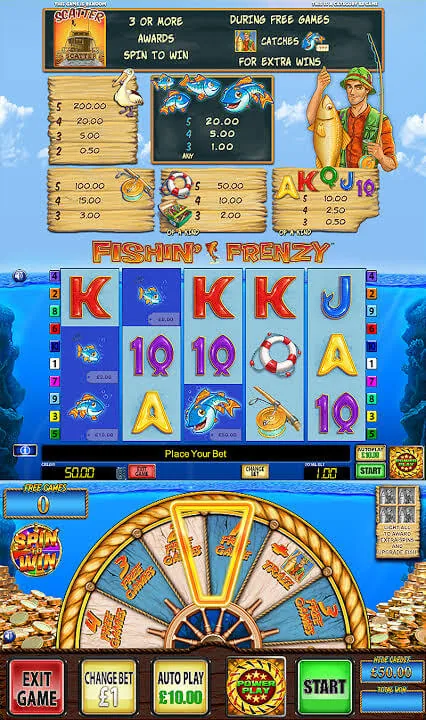
£5.00. That is the hard ceiling — the most anyone in Britain can put behind a single spin, and £2.00 if you are 18 to 24. Dan, a friend who works rotating shifts in Sheffield, had that figure in his head on a quiet Tuesday when he opened the Fishin Frenzy demo with a mug of tea and no intention of spending a penny.
This page is about what that free session actually is: a clear look at the reels with the money taken out, not a warm-up that somehow owes you a payout. We will cover where the demo runs, what twenty minutes of it feels like against the real stake range, which numbers cross into a real-money session and which quietly evaporate. Any operator names used here are examples of the UK market, not recommendations.
Free play in Britain means a viewing room, not a shortcut
Demo reels are common on UKGC-licensed sites, but that does not mean they are open to anyone wandering past. On many British sites free play only appears to logged-in, age-verified accounts, so « free » can honestly mean « free once you have an account and your age is confirmed ». That is a site design choice rather than a rule, but you will meet it often.
- Your demo balance is a counter, not money — it has no cash value and cannot be withdrawn or transferred.
- There is no wagering on demo play, because there is nothing to wager against.
- No identity documents, no withdrawal queue, no payment method — all of that is switched off.
- Operators can reset or cap demo sessions, and the free version is not always the exact build used for real stakes.
- Free does not mean unregulated: the site showing it still needs a UKGC remote licence, and the licence number sits in the footer.
Where the reels actually run, and whether they need your name
In practice the demo is a browser page. It loads in Chrome or Safari, plays in portrait or landscape, and closes when you close the tab. Nothing is installed, so nothing tells your phone it has a gambling app on it.
If your operator of choice runs a native app, both the App Store and Google Play permit UK real-money gambling apps from licensed operators, and the demo may sit inside that app as well. The advantage of the browser route is speed and no commitment; the advantage of the app is that the same account, limits and history are all in one place.
Registration is the sticking point. Many UKGC sites treat demo as part of the logged-in experience, so you may be asked for a name, date of birth and address before the play button lights up. That is the point where you decide whether you actually want an account — the reels are the same either way, and you can walk away from a sign-up page without losing anything except two minutes.
Twenty minutes in Dan's chair: pace, stakes and the shape of a session
Dan's session went like this. He set a stake near the bottom of the ladder, pressed spin, watched a few losing spins, nudged the stake up one notch, and then sat through a longer dry patch. No bonus landed. The counter dipped and, because it was demo, he did not feel it.
The stake range itself is the part worth studying, because it is the same range you get for real. The top of the ladder stops at £5.00, and £2.00 for anyone aged 18 to 24 — those are statutory stake caps, not marketing limits. Most players never go near them, and the sensible way to read the panel is that the bottom of the ladder is the default and the cap is a ceiling, not a target.
Pace is where demo flatters you. A slot is a volatility product, which is a polite way of saying losing runs are normal and sometimes long. In demo those runs cost you nothing but time, so they feel neutral, even restful. In a real session the same run costs real pounds and lasts the same number of spins. That gap between how a dry spell feels free and how it feels paid for is the single most useful thing the demo cannot teach you.
Which numbers cross the line into real money
The game engine is the same one. The published return figure, the paytable, the reel strips and the stake ladder do not change when the money becomes real. What changes is everything wrapped around them.
| What you are looking at | Demo session | Real-money session | |
|---|---|---|---|
| Game engine and published return | Same build | Same build | → |
| Maximum stake per spin | Capped at £5.00, £2.00 at 18–24 | Capped at £5.00, £2.00 at 18–24 | → |
| Your balance | A counter that resets | Your own money | → |
| Bonus wagering | Does not exist | Applies to any sign-up offer you accept | → |
| Withdrawal | Not possible | Documents first, then hours to a few days | → |
| Tax on winnings | Not relevant | Tax-free for you; the operator pays Remote Gaming Duty | → |
What does not cross the line: your demo balance, your demo streak, and the feeling that the reels are « due » after a quiet spell. Each spin is independent. A demo that paid well on Tuesday tells you nothing about a real session on Wednesday.
The parts the demo quietly edits out
This is the honest list, and it is the reason a free session is a preview rather than a rehearsal.
- Identity checks. Age and identity verification come before you can deposit, and documents are needed before your first withdrawal. Twenty-four to forty-eight hours is a normal turnaround.
- The first withdrawal is the slowest one you will ever make. Everything after it moves faster — e-wallets in a few hours to a day, Faster Payments to a bank the same day or within two working days, debit card refunds in one to three working days.
- Deposit limits. Operators must offer them, and the sensible moment to set one is before your first deposit, not after a bad evening.
- Affordability checks. These start from £150.00 net deposits a month, with credit-reference data used at the first stage — so a heavier month can trigger a request for information.
- Payment rules. Credit cards are banned for gambling in Britain, and the method must be in your own name.
- Offers and their strings. Any welcome bonus carries wagering requirements, which is exactly the part a demo never shows you because there is nothing to wager.
Fishin Frenzy in your pocket on the 07:42
Mobile demo is genuinely low-friction: no install, no storage, no permission prompts. The reels scale down to a portrait layout, the stake controls sit under your thumb, and closing the tab ends the session cleanly.
Two practical notes. First, a slot demo is light on data but a long session on mobile data adds up — use wifi if you are only exploring. Second, if you play on a phone you share or hand to children, a browser tab is easy to leave open; close it properly, and use the device's own screen lock. If you later move to a real-money app, remember the app stores list the age rating openly, so anyone glancing at your home screen can see what it is.
Stepping up to real money with the smallest possible exposure
If the demo left you curious, the switch can be done in a way that keeps the downside small and the surprises few.
- Check the footer first. Find the licence number and match it against the UKGC public register before you enter a single detail.
- Open the account and set a deposit limit immediately, before the first deposit. Do it while you are calm, because limits set in a good mood are the ones that hold in a bad one.
- Send your documents early, unprompted. Verification that is done on day one is verification that is not blocking your first withdrawal later.
- Deposit a small, fixed amount by debit card, PayPal, Apple Pay, Open Banking or paysafecard — in your own name, and never by credit card.
- Play at the lowest stake on the ladder, not at the £5.00 cap. The cap is a legal maximum for the market, not a suggested setting for a first evening.
- Treat any welcome offer as a separate decision with its own wagering terms, and read them before you opt in.
FAQ
Is the Fishin Frenzy demo free, and do I need an account?
The demo costs nothing. Whether you need an account depends on the site: many UKGC-licensed operators only show free play to logged-in, age-verified users, while others let you look first and register later. Neither approach is a legal requirement — it is a design choice.
Do my demo results tell me anything about real spins?
Almost nothing. The engine and the stake ladder are the same, but each spin is independent, so a good or bad demo run has no bearing on what happens with real money. The demo is useful for learning where the controls are and how the session feels, not for predicting anything.
Can I play the demo on my phone without installing an app?
Yes. The demo runs in a mobile browser, so there is no download and no storage used. You can also find it inside a licensed operator's app, but the browser route is faster and leaves nothing on your home screen.
Why is the first withdrawal so much slower than the rest?
Because of identity verification. Age and identity checks happen before you deposit, but documents are required before a first withdrawal, and twenty-four to forty-eight hours is normal. After that one clears, e-wallets usually pay in a few hours to a day, Faster Payments the same day or within two working days, and debit cards in one to three working days.
Is there any way to make free play pay out?
No. A demo balance is a counter with no cash value, and there is no tactic, timing or pattern that converts it into money. Any site or video claiming otherwise is selling you something that does not exist.